Dataset bias
Generic clinical models may inherit mixed-sex or male-skewed training distributions that do not represent women's hormonal health equally well.
For a submission to the 6th Hack-Nation Global AI Hackathon, we built this application. A clinical-support prototype for women's hormonal health that combines multiple specialised models instead of trusting a single predictor — then connects the result to a shared patient record workflow, role-based access, and a safety-aware health chatbot.
The project challenges the idea that one dataset or one model should carry the full decision. Instead, different sources of evidence contribute to a combined output, while the application keeps the final interpretation in the hands of a clinician.
Generic clinical models may inherit mixed-sex or male-skewed training distributions that do not represent women's hormonal health equally well.
Women-only models can be more targeted, but a narrow cohort may not capture every relevant signal or comorbidity on its own.
Patient history is often distributed across separate providers. The prototype explores a shared record layer with controlled patient and doctor permissions.
Uploaded lab and screening information is transformed into structured features and evaluated through complementary model paths. Their outputs are combined into a final result rather than treating any individual model as absolute ground truth.
Uses mixed-sex thyroid data containing TSH, T3, T4, T4U, FTI and patient context.
Uses women-only hormonal, menstrual, symptom and ultrasound/follicle information.
Encodes interpretable diagnostic rules so the pipeline is not dependent only on learned statistical patterns.
A walkthrough of the patient and clinical workflows, from secure access and health records to AI-assisted analysis and human escalation. Use the arrows or dots to explore the interface.
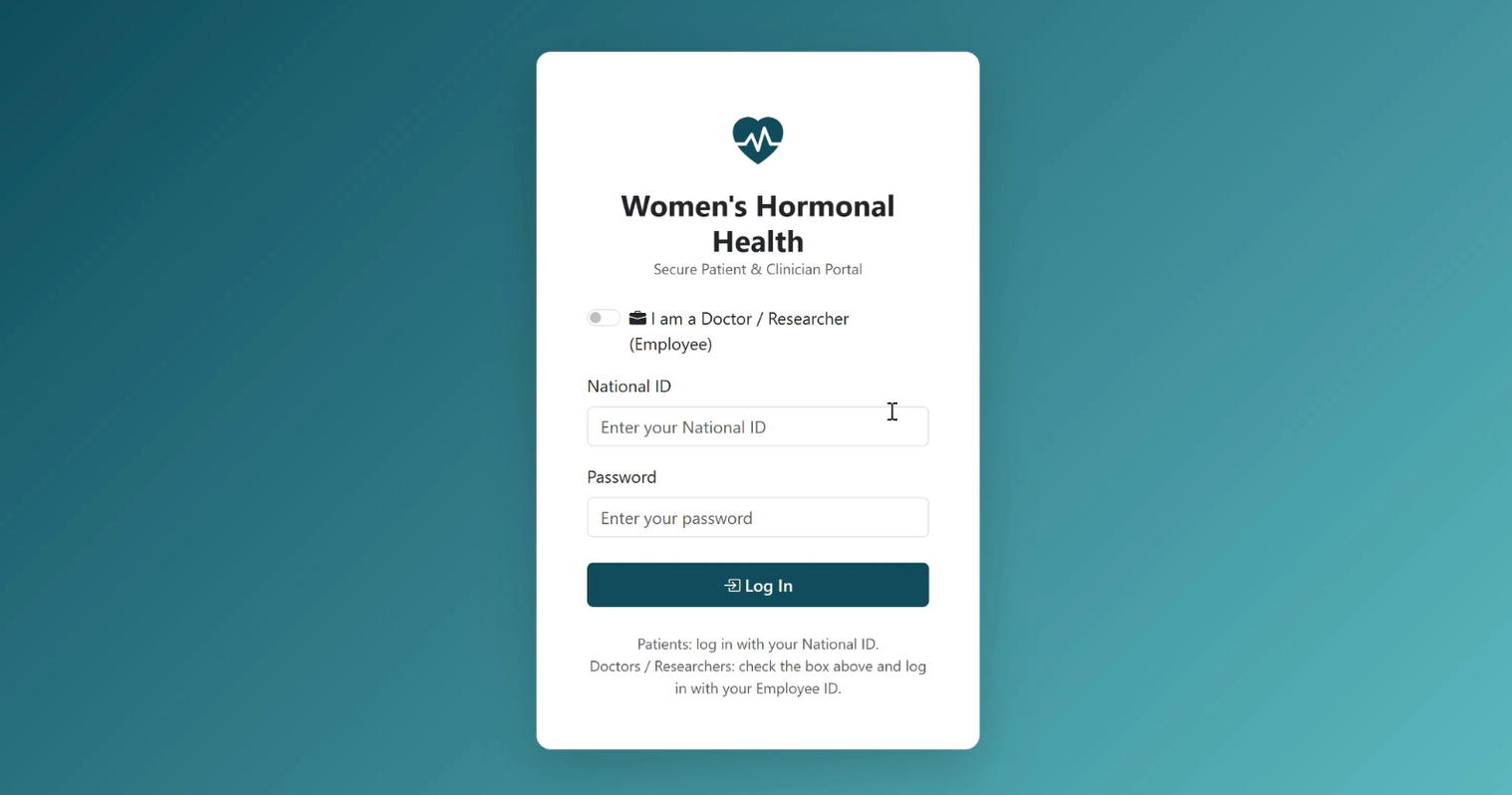
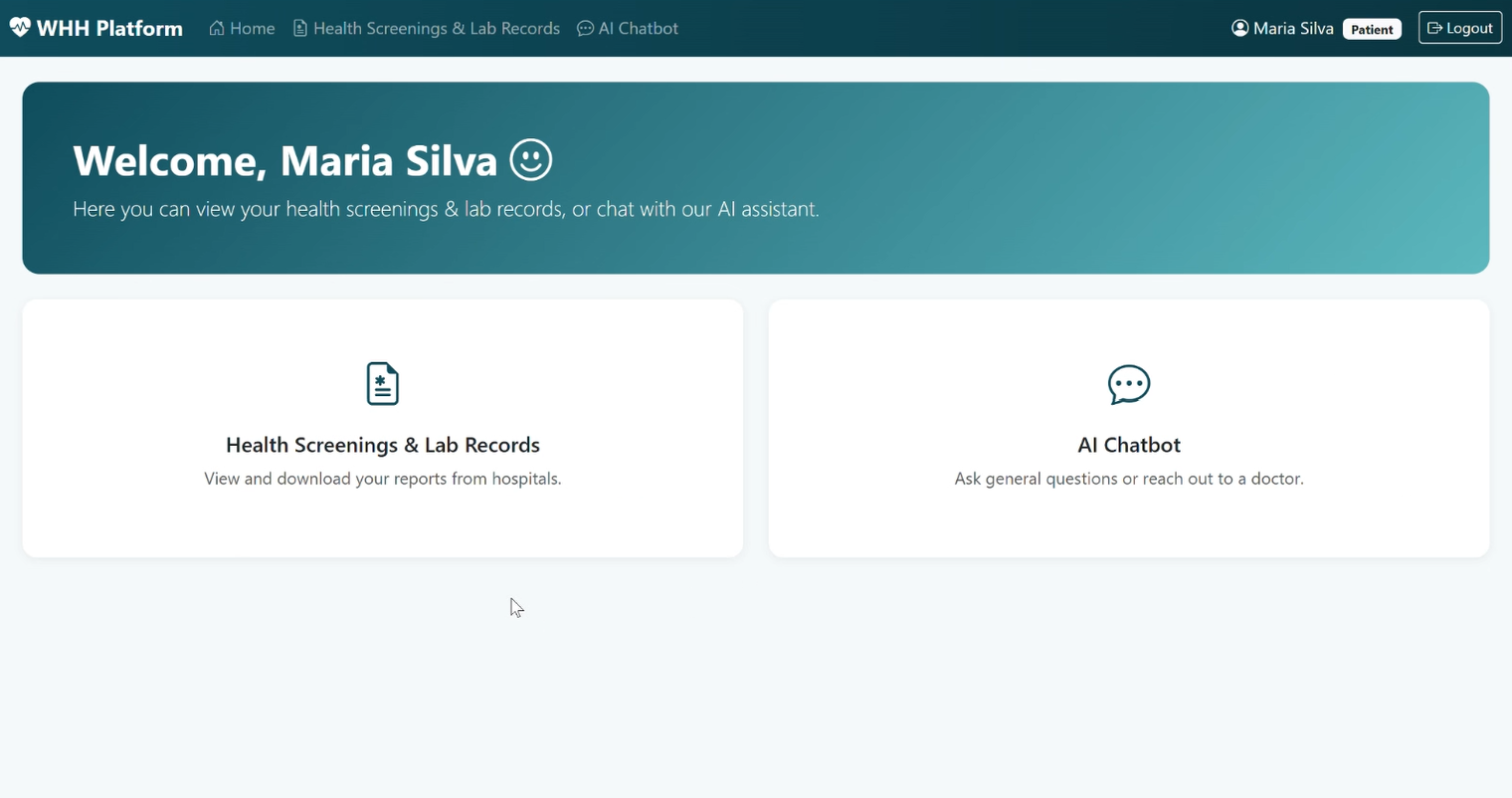
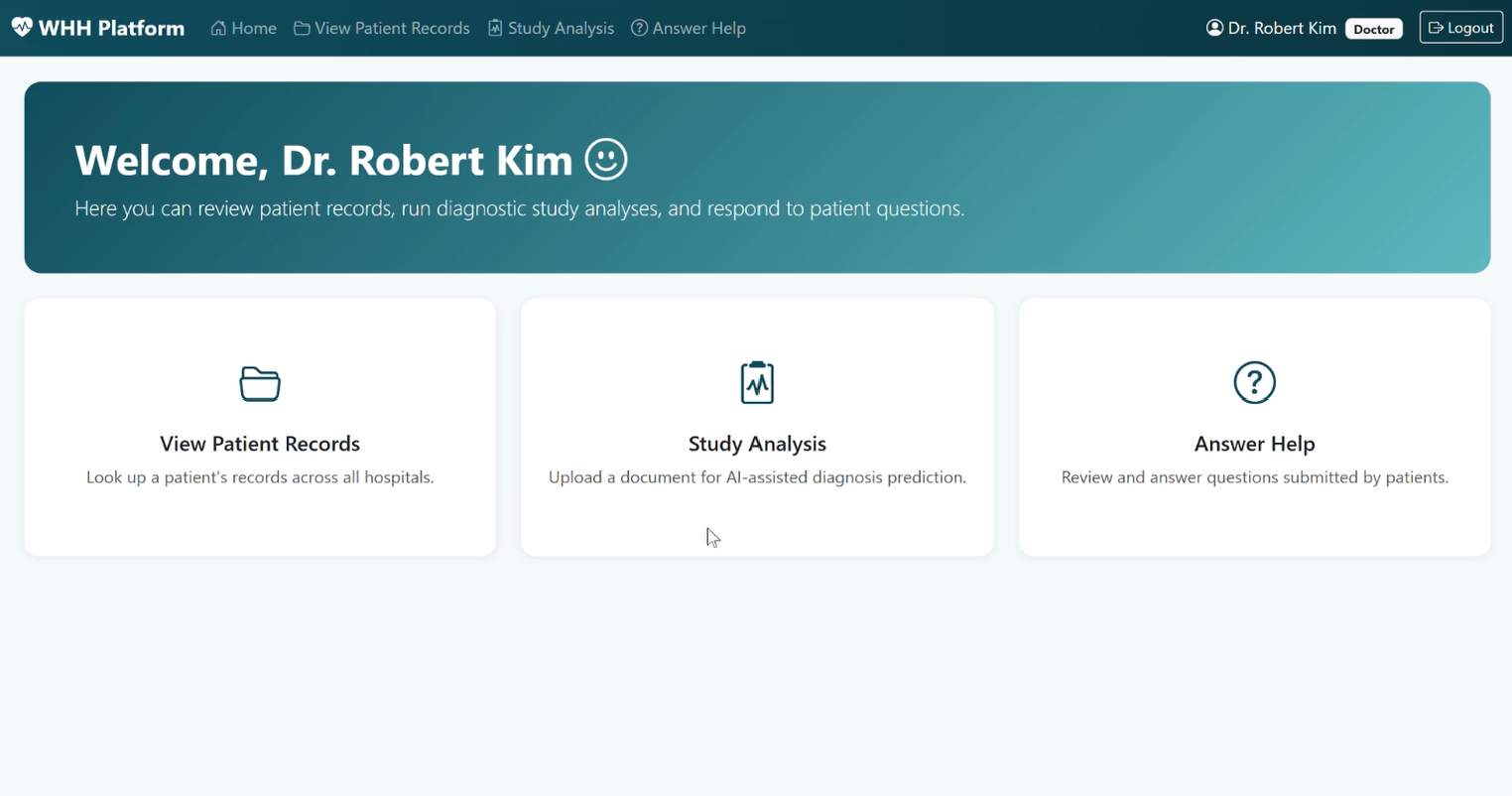
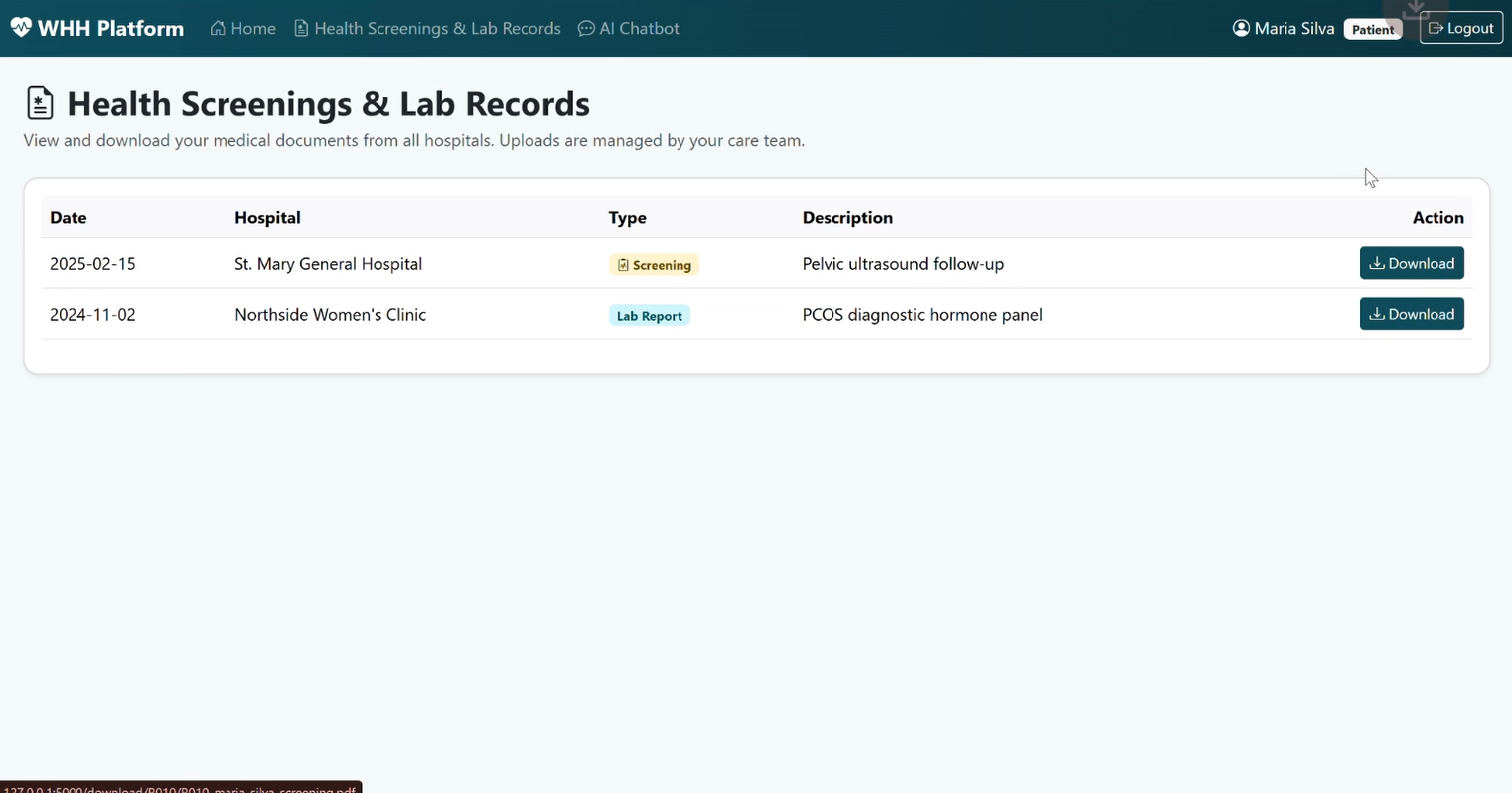
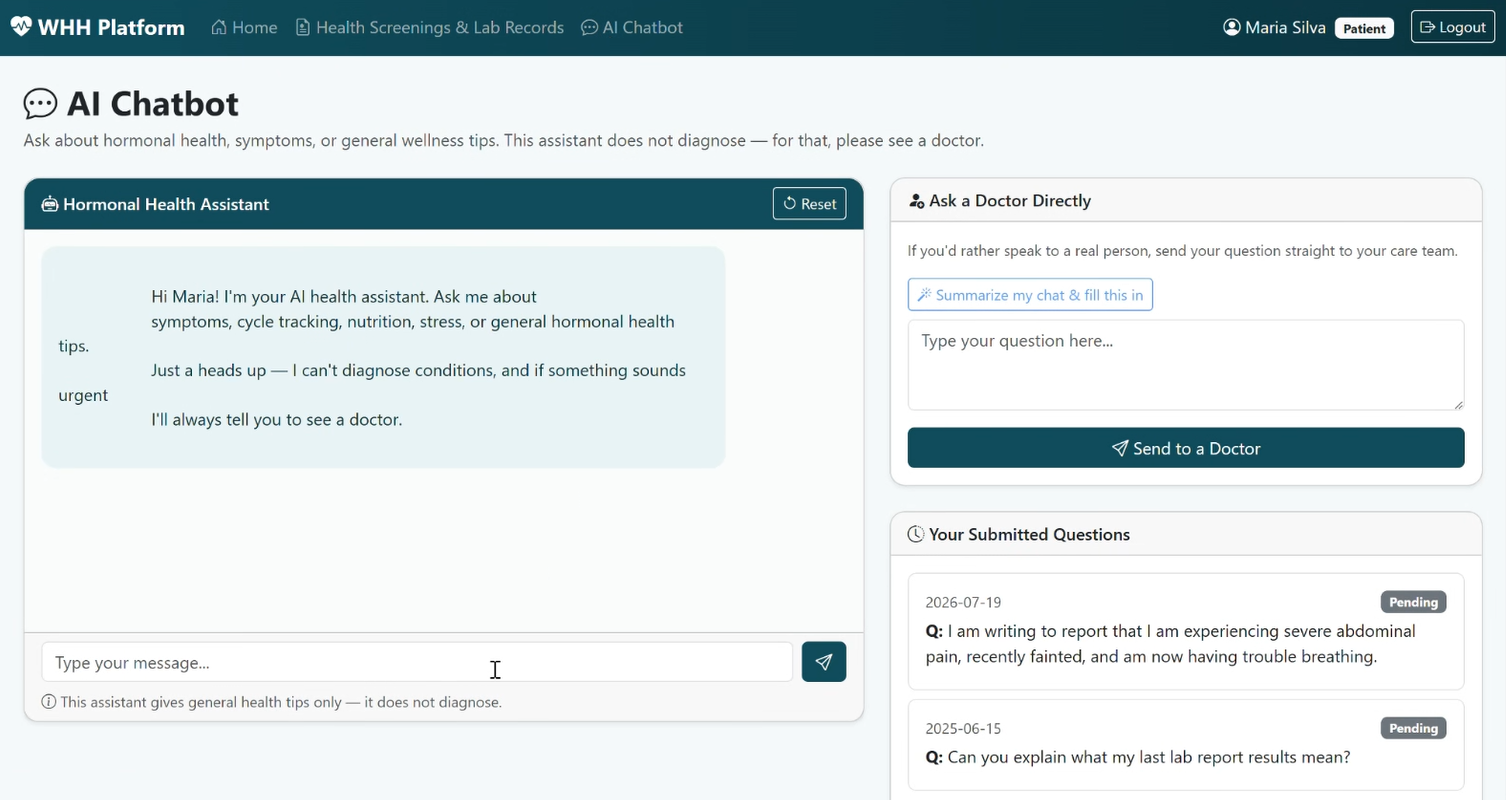
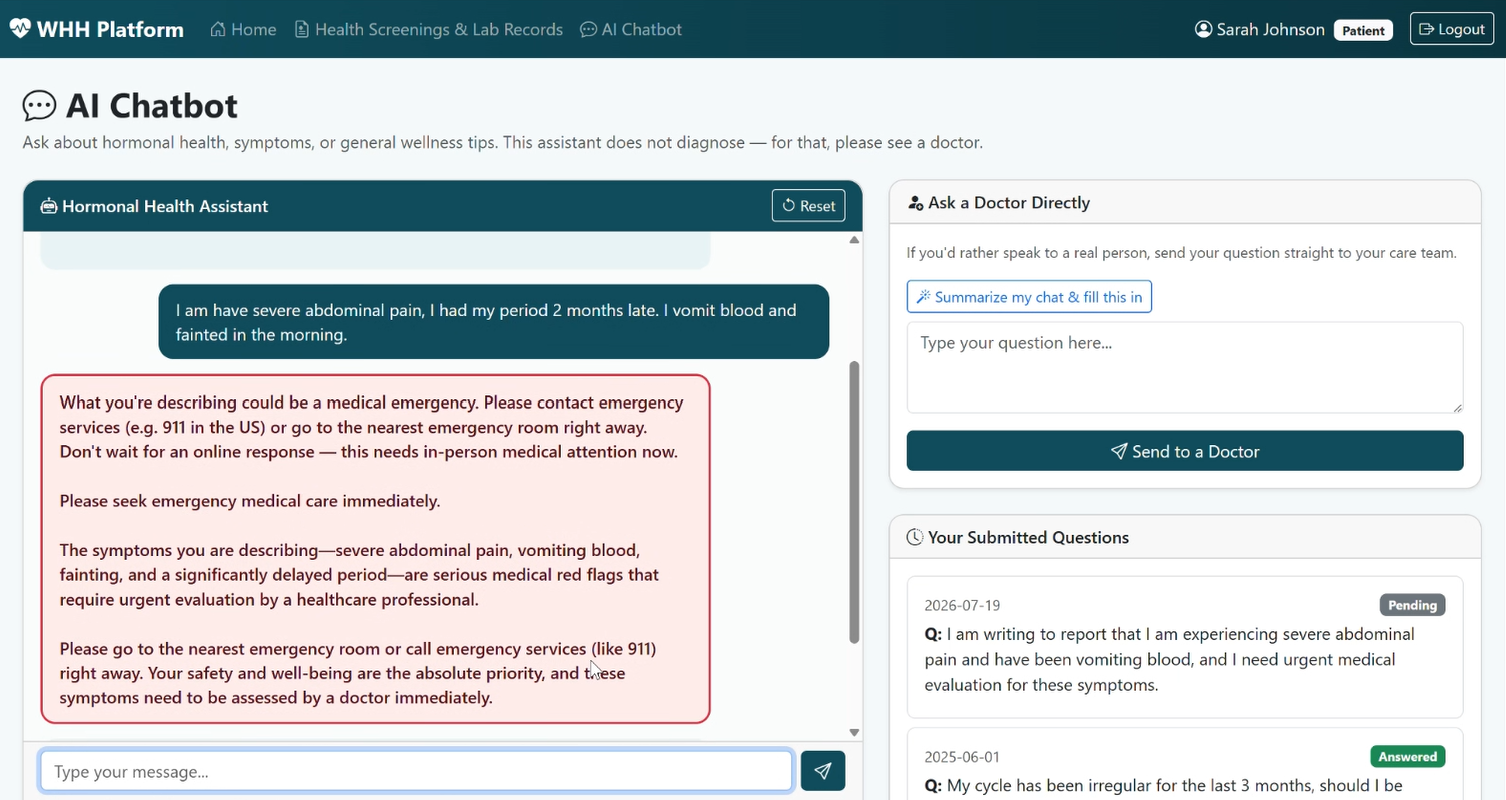
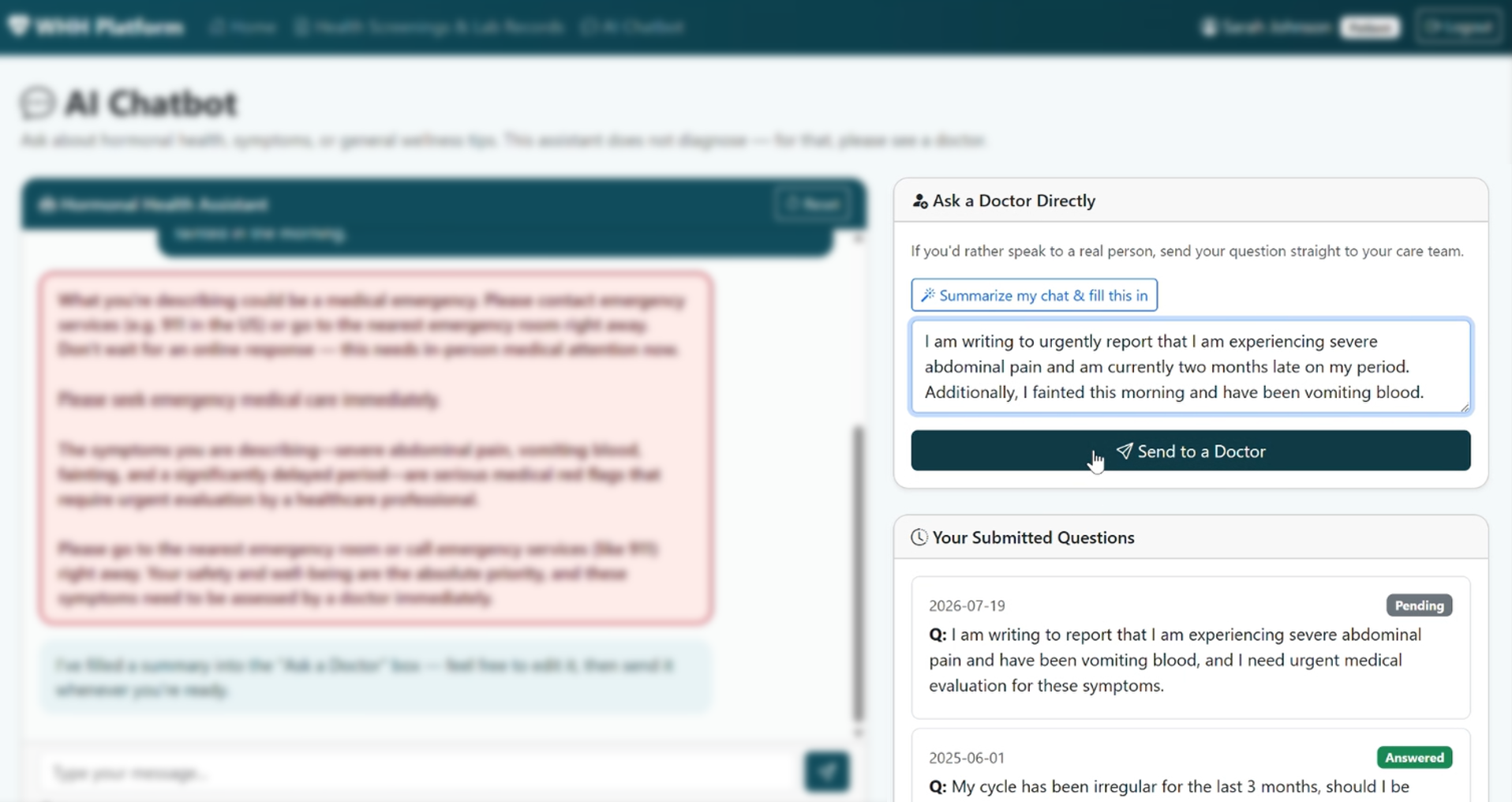
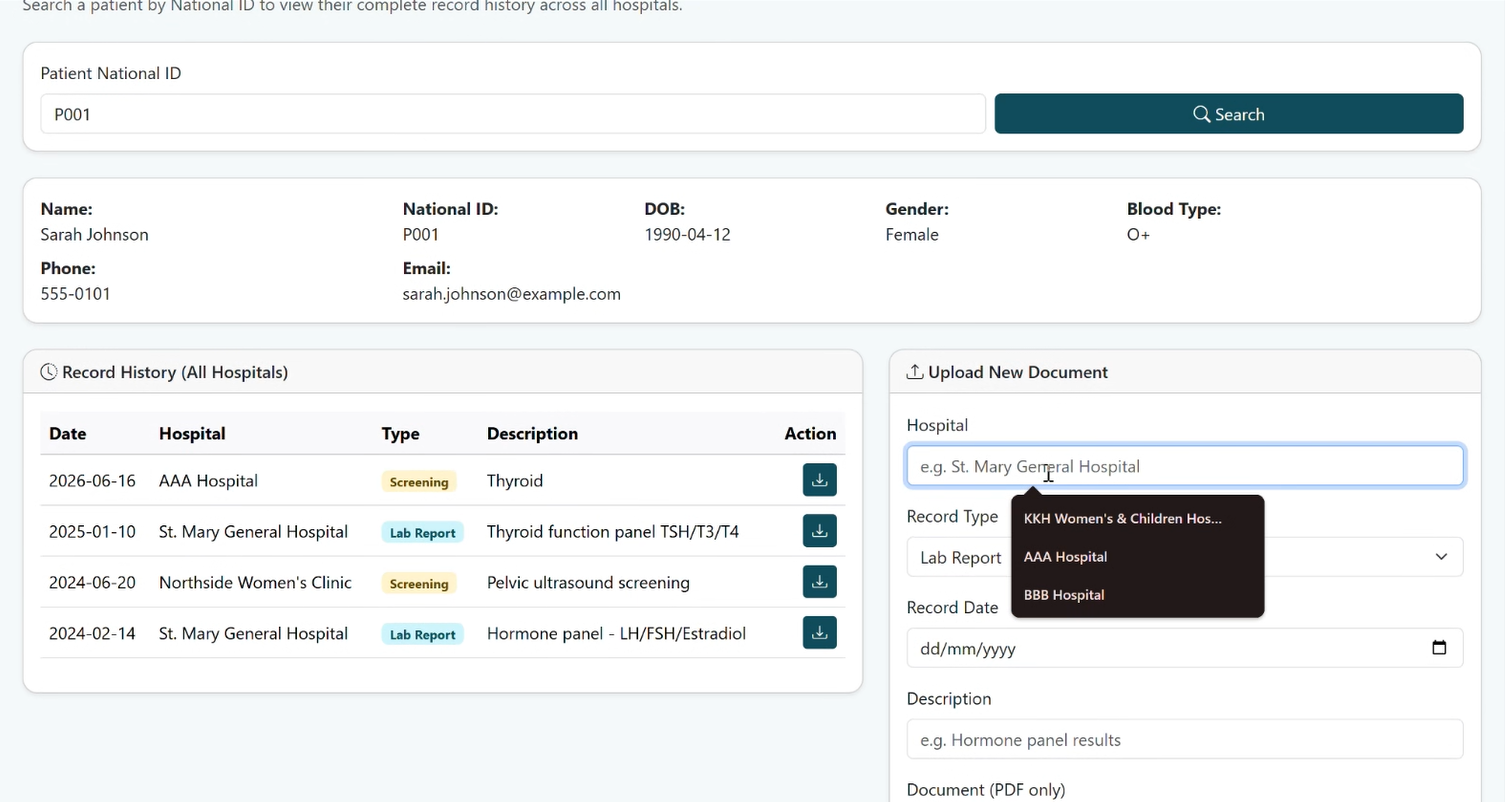
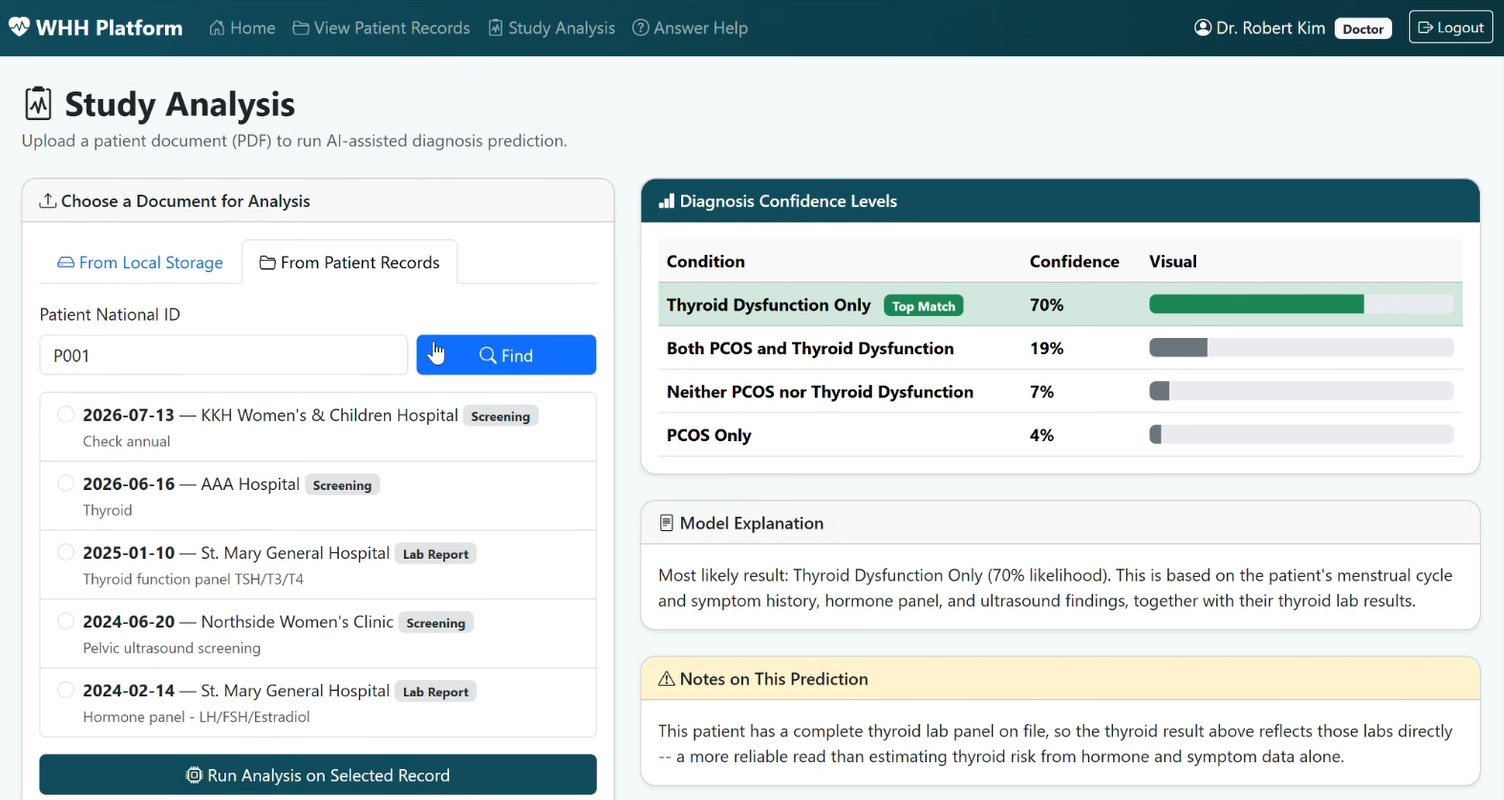
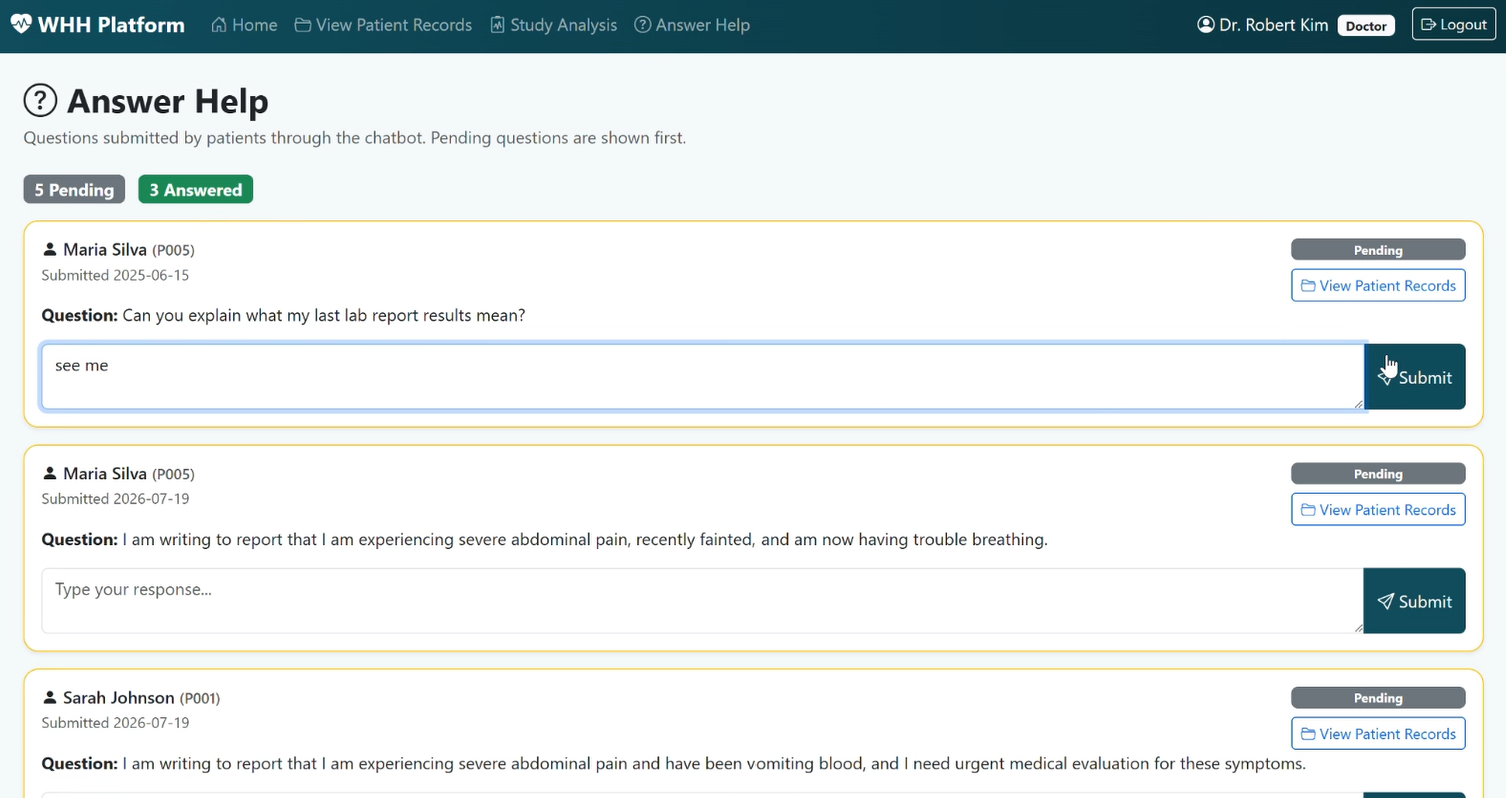
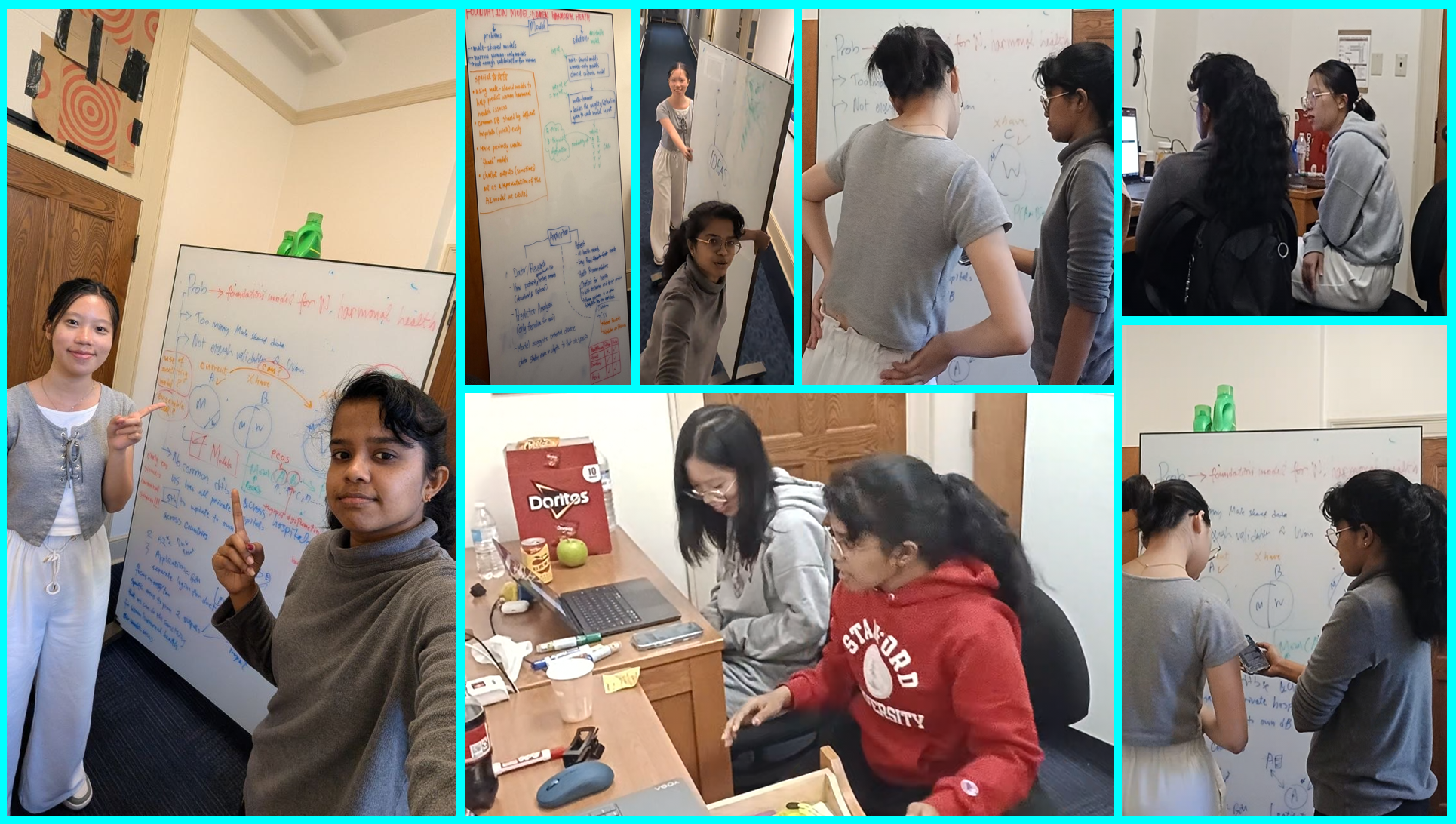
This video includes introduction of the team and a demo of the application showcasing patient record access, chatbot escalation, clinician upload permissions, the doctor help queue, and the study-analysis pipeline.
The prototype wraps the model inside a role-aware healthcare workflow, separating what patients can do from what clinicians can do and providing a human escalation path for chatbot interactions.
Patient history from participating providers is presented through a common record view, reducing the need to navigate isolated hospital portals.
Patients can read and download their records, while clinicians additionally receive upload access for adding new reports and screening results.
The health assistant is positioned as an informational interface rather than a diagnostic tool. Serious queries can be summarised and escalated for doctor review.
The model surfaces evidence for further investigation; the clinician remains responsible for interpreting the result and making the medical decision.
The project uses a women-only PCOS cohort alongside a mixed-sex thyroid cohort, allowing the system to explore how specialised and generic data sources can contribute differently.
Prasoon Kottarathil · Polycystic Ovary Syndrome (PCOS) Dataset
UCI Machine Learning Repository · Thyroid Disease / Hypothyroid Dataset
The documented implementation centres on a Flask application, reproducible dataset processing, machine-learning inference, persistent patient records, and an AI-assisted patient interaction layer.
Artificially Unintelligent explores a healthcare AI workflow where specialised models, clinical logic, missing-data awareness and human review work together instead of relying on a single opaque prediction.
Open GitHub repository ↗